Long sales cycles
A form fill is only the beginning. Campaigns need to support the path from first inquiry to quote, lane review, and signed contract.
We run Google Ads for freight brokers, 3PLs, warehouses, and logistics companies that want real sales conversations—not wasted clicks.
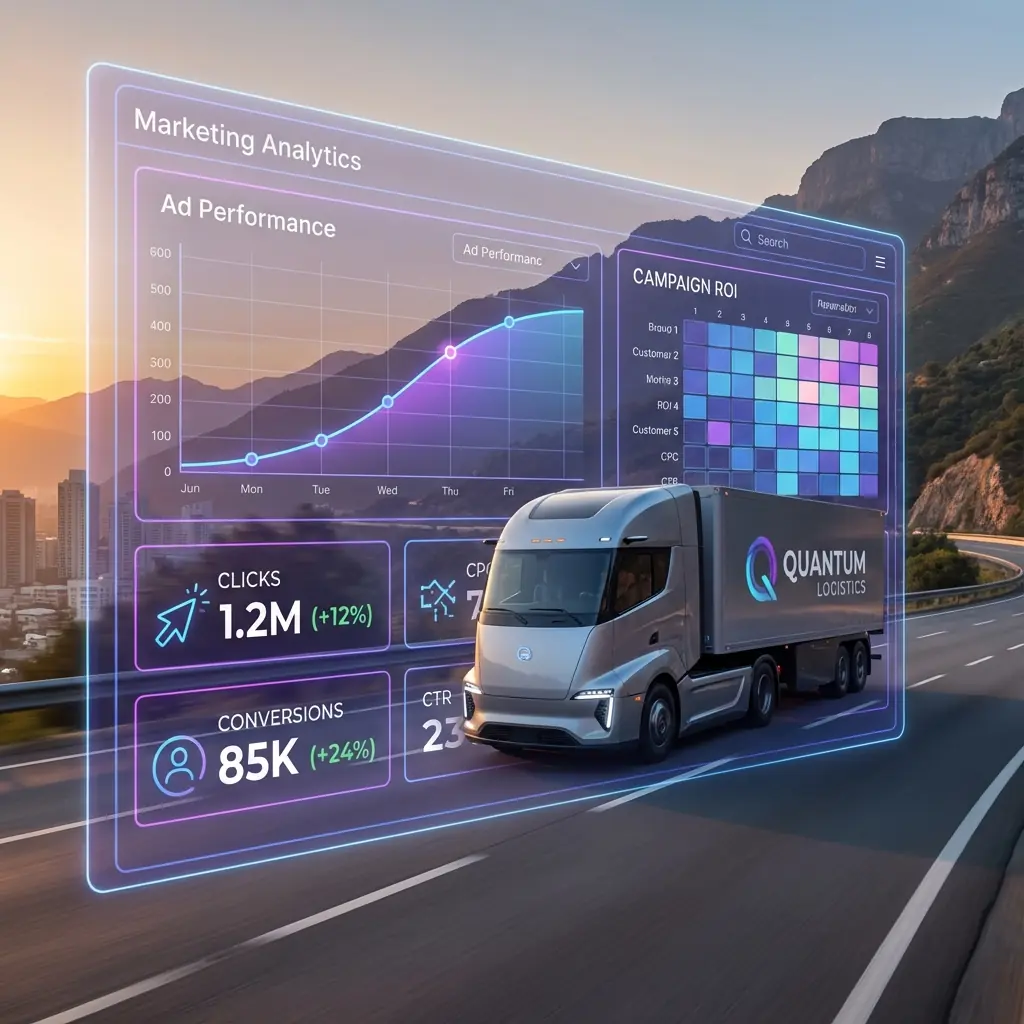
Logistics campaigns operate inside long sales cycles, tight margins, and search results crowded by marketplaces. The account has to separate real shipper demand from expensive noise.
A form fill is only the beginning. Campaigns need to support the path from first inquiry to quote, lane review, and signed contract.
High-intent searches compete with brokers and marketplaces such as uShip and Freightos, making precise positioning essential.
Peak periods, produce seasons, retail cycles, and capacity changes can quickly shift which services and markets deserve budget.
When margins are tight, cost per lead is not enough. Lead quality, quote rate, and expected account value have to guide decisions.
Every engagement moves through five visible stages, with clear decisions, deliverables, and reporting from the first audit onward.
We review account structure, search terms, conversion data, offers, landing pages, and sales feedback.
We define target services, lanes, markets, buyer intent, exclusions, budget, and the route to conversion.
Campaigns, ads, tracking, and landing pages launch with a deliberate structure and protected budget.
We refine queries, bids, audiences, creative, and pages using conversion signals and sales team feedback.
You see what changed, what produced qualified demand, and what we recommend testing next.
Campaigns, tracking, landing pages, and reporting work together so your budget produces more than clicks—it produces useful sales conversations.
We organize campaigns around the services, markets, and searches most likely to turn into good-fit freight opportunities.
We track the actions that matter after a click, then use sales feedback to teach the account what a valuable lead looks like.
Each page matches the search with the right service, geography, proof, and next step so buyers do not have to hunt for answers.
You see where the budget went, which searches produced useful conversations, and what we are changing next.
We connect campaign data with sales feedback so performance means more than a lower cost per form submission.
Measure spend against opportunities that match your services and market.
Understand which searches generate useful conversations, not just forms.
Use sales outcomes to improve bidding, targeting, and campaign direction.
Management is priced separately from ad spend. Start with one focused search program or build a wider system across more services and markets.
Campaign setup, new landing-page builds, and larger multi-location programs are scoped after the initial account review.
Campaigns can begin producing inquiries after launch, but timing depends on search volume, budget, geography, offer strength, and account history. Early data is used to improve quality before scaling.
We understand the operating context and use it to shape targeting and messaging. Your team remains responsible for approving regulatory statements, authority details, and claims before publication.
There is no universal minimum. We recommend a viable range after reviewing keyword costs, service area, competition, and the number of campaigns required to produce useful data.
Yes. We can create or improve logistics-specific landing pages so each post-click experience matches the search, communicates capability, and qualifies the inquiry.
Yes. Depending on your systems, tracking can include calls, quote forms, qualified leads, CRM opportunities, offline conversions, and revenue feedback.
Only when they fit. Search is often the control layer; Performance Max requires suitable data and creative, while Local Services Ads depend on Google’s category and location eligibility.
Let’s identify the highest-value search opportunity in your market.
Plan your campaign